
Once known as Hotel Villa Lapas, the property found new life through Design Lab’s interior design vision—emerging as Santa Lucía Jungle Hacienda, Autograph Collection by Marriott. What began as a transformation soon revealed itself as a story of renewal, shaped by memory, nature, and a deep sense of place.
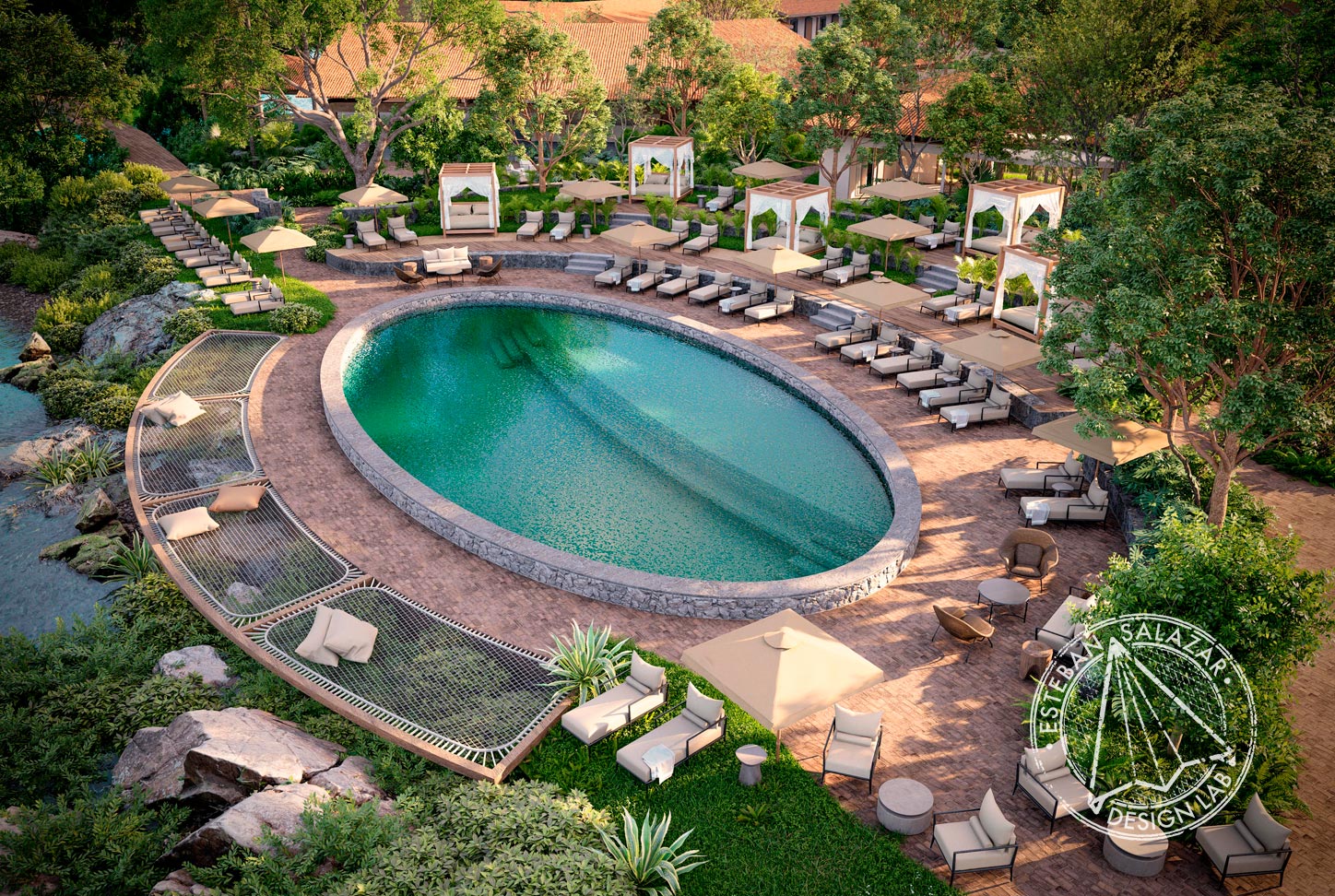
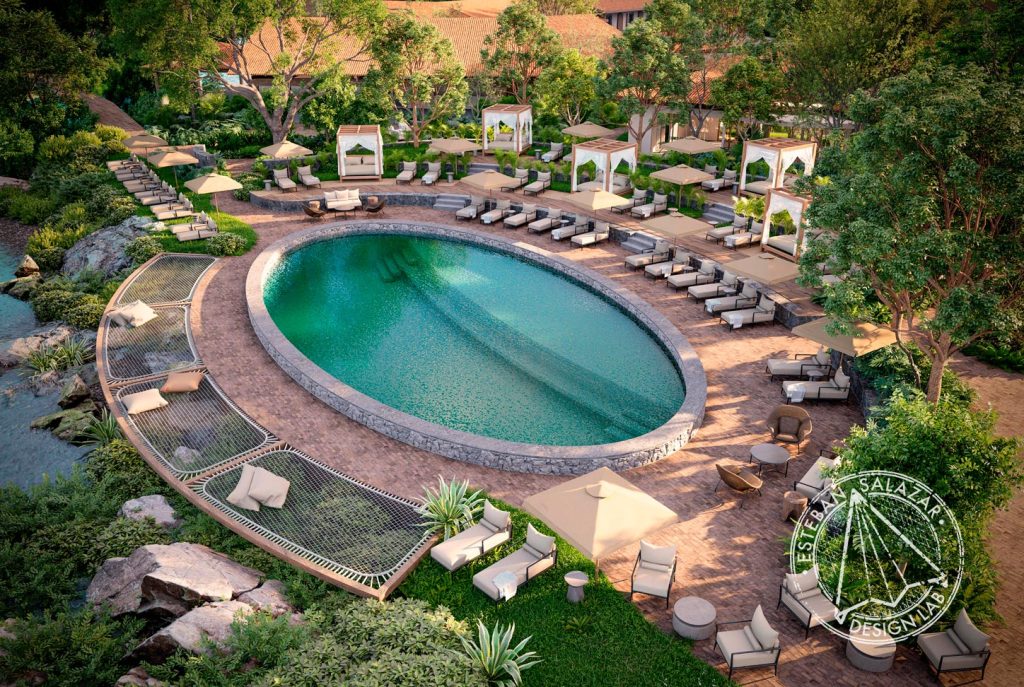
Set within Costa Rica’s lush landscape, Santa Lucía unfolds as a sanctuary where heritage and wilderness coexist in quiet harmony. Under Design Lab’s creative direction, the project focused on reimagining the main building and its social spaces—including the lobby, restaurant, terraces, pool, snack bar, and kids club—crafting a seamless and immersive guest experience rooted in authenticity.
Local Materials, Textures, and Craftsmanship
Materiality became the soul of the project and the starting point of its narrative. At Santa Lucía Jungle Hacienda, the selection of materials was conceived as a dialogue between two worlds: the elegance and structure of the colonial legacy, and the organic, spiritual wisdom of Costa Rica’s indigenous cultures.
Stone worn by time, brick, natural woods, clay tiles, and woven fibers were chosen not only for their beauty, but for what they represent. The colonial influence is expressed through refined craftsmanship, architectural order, and carefully worked materials, a testament to human intervention, technique, and permanence. In contrast, indigenous heritage emerges through raw textures, natural fibers, barro, and organic forms that reconnect the spaces with the land, ritual, and ancestral memory.
This duality becomes tangible throughout the project through carefully integrated design gestures. One example is the use of a woven natural mesh that forms the skin of the restaurant’s cocoon-shaped sofas, evoking an indigenous relationship with natural materials and traditional weaving techniques.
At the same time, cascading chandeliers crafted from natural fibers introduce soft textures and a handcrafted character, reinforcing the connection between design and ancestral material culture while creating an atmosphere of subtle ceremonial presence.
Together, these elements coexist with the colonial framework of wooden roofs and clay tiles, achieving a visual and emotional balance between the organic and the architectural, the handcrafted and the constructed.
Interior Design as a Business Strategy
At Santa Lucía, interior design became the element that transformed the project from a property into a true experience. While the hotel already existed, its spaces did not yet reflect the atmosphere, identity, and emotional depth the brand envisioned.
It was at this stage that Design Lab was invited to take the lead of the interior design, translating the client’s narrative into a coherent and immersive spatial language. Through a carefully crafted concept, the project evolved into a place where mysticism, history, and nature could be felt rather than explained.
Guests do not need to be told the story of Santa Lucía. They experience it. Through the way spaces unfold, through materials, light, textures, and silence, the concept becomes intuitive and emotional. What they walk through already communicates what the brand stands for.
This is where the true power of interior design and storytelling lies. When design is intentional, narrative driven, and emotionally grounded, it creates more than beautiful spaces. It creates hotels worth remembering, destinations worth returning to, and brands that remain in the memory long after the stay has ended.
Design Beyond Aesthetics
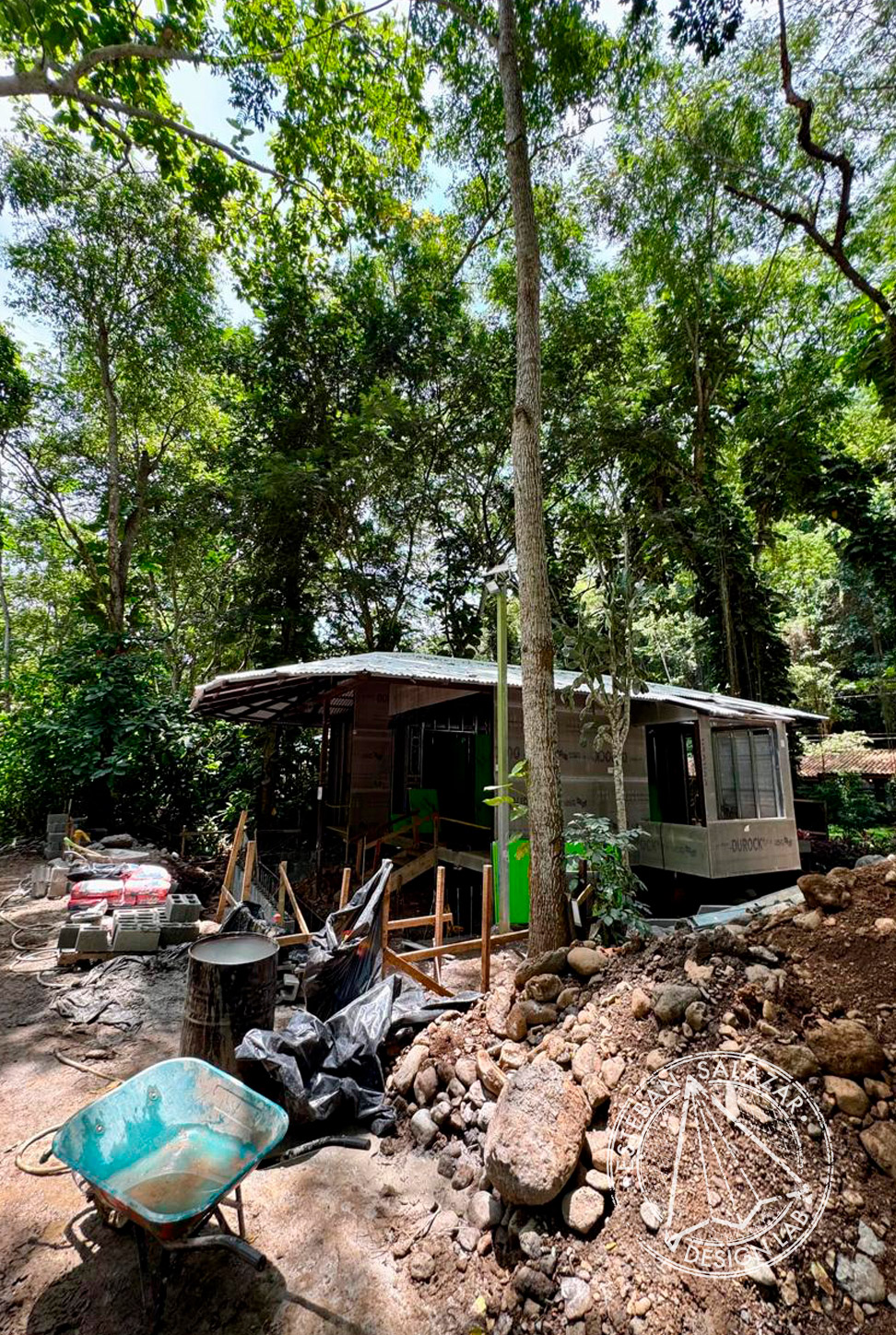
The Deluxe Suites were conceived as character driven spaces rooted in a retrospective view of Costa Rica’s indigenous history. Their inspiration came from ancestral settlements and the way indigenous communities moved through the landscape. The path leading to the suites follows an existing route beside the Tarcolitos River, inviting guests to experience the rhythm of nature in a sequence that evokes those traditional journeys toward communal spaces. This intentional connection to the natural context makes the approach itself part of the guest experience.
The exterior of each suite reinforces this narrative. Traditional fire pits were introduced as contemporary interpretations of places where ritual fire once brought people together, recalling their role in connection, storytelling, and presence. The architecture reflects indigenous construction principles through thatched roofs, stone walls, and raw material compositions, while the interiors provide a refined layer of modern hospitality, creating a thoughtful contrast between ancestral form and first class comfort.
A different expression of this philosophy unfolds in the hotel’s restaurant – where the boundary between indoors and outdoors dissolves. Guests feel surrounded by the jungle and the sounds of the river, while remaining within a space defined by global design standards and careful architectural control. Nature becomes part of the spatial experience, uniting sophisticated design with immersive presence.
Design in this context becomes an invisible guide. It shapes how guests arrive, how they move, where they pause, and what they feel. Beyond aesthetics, it is design that transforms space into story, and story into a lasting emotional experience.
The Biggest Challenge: Designing in Sync
One of the greatest challenges of the project was the scale and complexity of Santa Lucía in relation to the time available for its development. The schedule was relatively tight for a property of this size and ambition, which required a high level of precision, coordination, and constant design refinement.
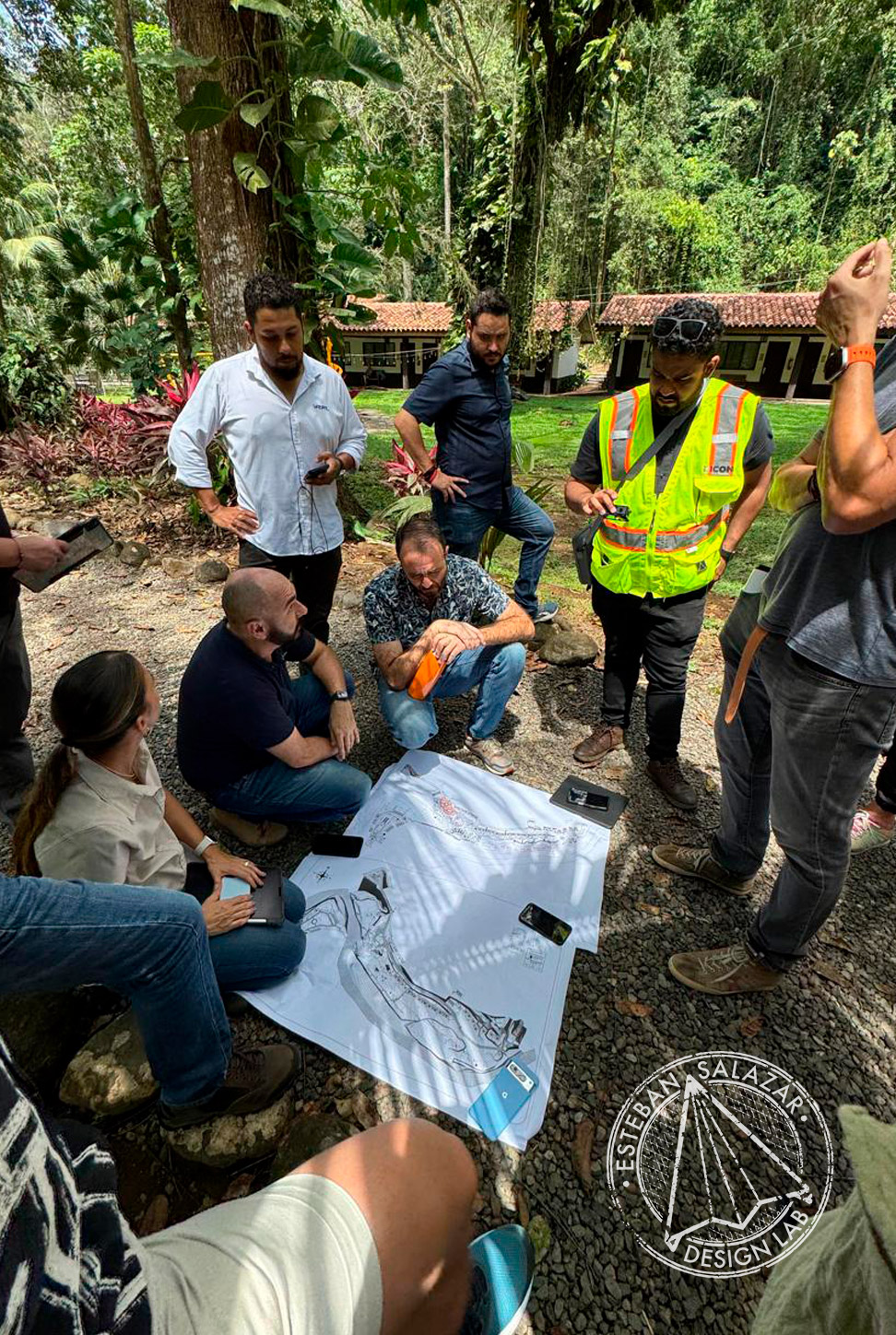
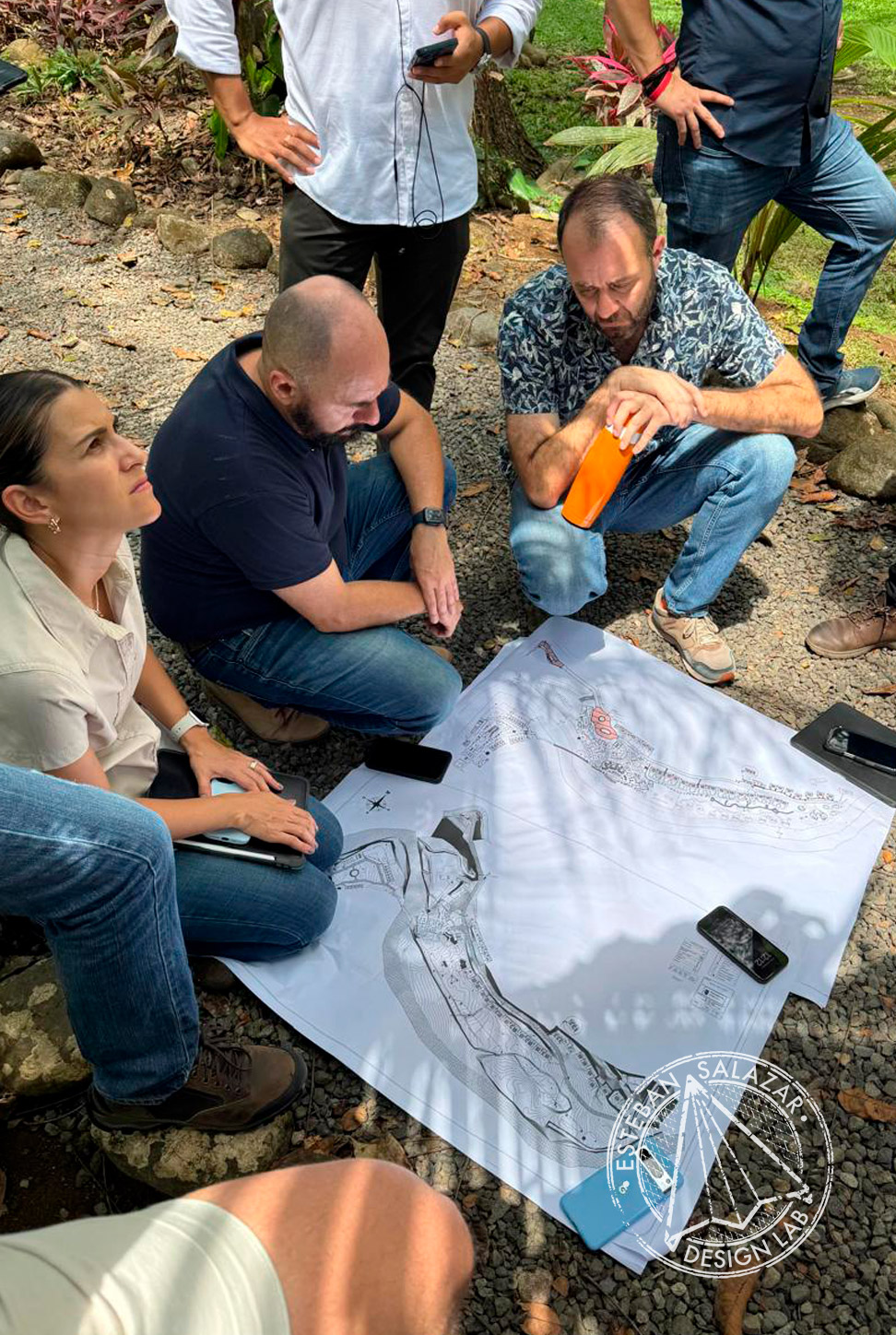
Throughout the process, Design Lab worked closely with Integra Arquitectos and TPA Landscaping, aligning architecture, interiors, and landscape design through continuous collaboration and on site decision making. Every stage demanded careful evaluation to ensure that concept, functionality, and experience evolved together.
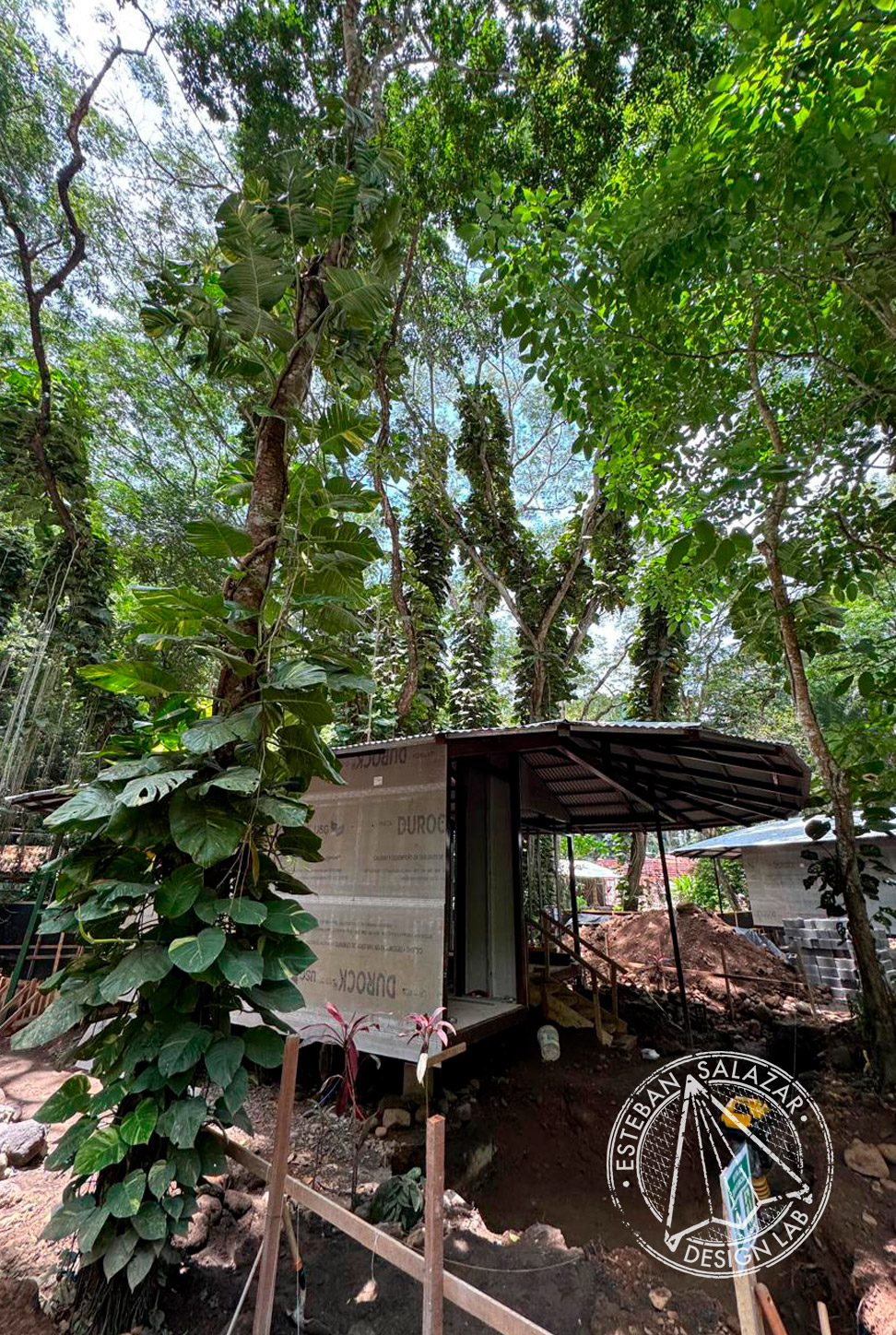
The site itself added another layer of challenge. The area is surrounded by dense vegetation, and both the natural river and existing trees had to be preserved without intervention. Designing within these constraints meant carefully studying how to relocate and shape the built elements without disturbing the environment. A significant part of the work took place directly on site, testing how structures could be integrated while maintaining the integrity of the landscape. Respect for nature became a defining principle of the project’s core.
In this context, all disciplines worked as one. The connection between pathways, buildings, and shared spaces was reconsidered multiple times until a balanced and fluid experience emerged. Every decision was guided by the same objective: to create an arrival sequence and overall environment that reflects the highest standards of contemporary hospitality, where comfort, beauty, and emotional impact coexist naturally.
Emotional Response Through Design
More than creating beautiful spaces, the project sought to create meaningful ones, spaces deeply rooted in place and nature. Santa Lucía Jungle Hacienda is located beside Carara National Park, directly bordering this protected area, yet remaining clearly outside its boundaries. This privileged position allows the hotel to exist in constant dialogue with one of Costa Rica’s most important ecosystems, without intervening in it.
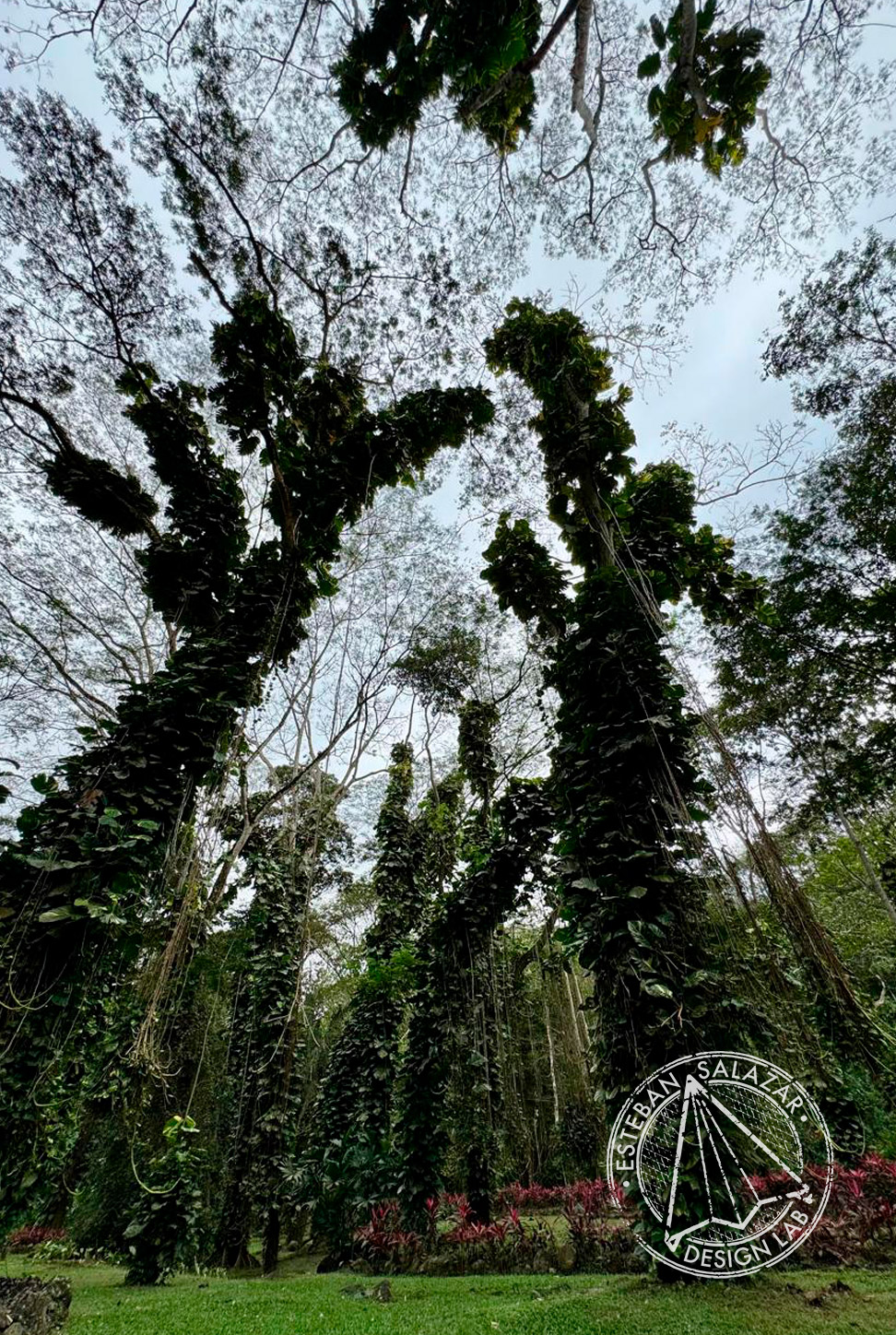
Surrounded by extraordinary biodiversity, native vegetation, and towering trees reaching approximately 15 to 20 meters in height, the property feels immersed in the forest canopy itself. This proximity to nature, combined with the richness of wildlife and landscape, transforms the hotel into a sanctuary for those seeking connection, stillness, and authenticity, while serving as a gateway to the natural wonders of the region.
Throughout the design process, colleagues, collaborators, and visitors shared a similar reaction upon arriving for the first time: a profound sense of immersion. From the moment guests enter the property, architecture opens itself to the surroundings, allowing lush vegetation, filtered daylight, and expansive views to become essential components of the spatial experience.
Adding another sensory layer to this experience is the constant presence of the nearby river. Its sound flows gently across the property, becoming part of the hotel’s natural soundtrack. For many guests, this quiet murmur induces calm, slows the rhythm of thought, and reinforces the feeling of being sheltered within nature, enhancing the emotional connection to the place and turning each stay into a moment of genuine restoration.
A Living Story
In today’s hospitality landscape, many hotels are conceived around trends, formulas, and visual references that are instantly recognizable, yet often interchangeable. Beautiful, functional, and efficient, but disconnected from any deeper meaning. Spaces that can exist anywhere, because they belong nowhere in particular.
Santa Lucía was envisioned differently. From the beginning, the project was shaped by the belief that a truly memorable hotel is not defined by style alone, but by the story it carries. When architecture and interior design are guided by a clear narrative, spaces gain identity, emotion, and intention. They stop being neutral backdrops and become places with soul, capable of being felt before they are understood.
For Design Lab by Esteban Salazar, the project reflects a core belief: when interior design is rooted in authenticity, it becomes timeless. It gains the ability to honor the past while thoughtfully shaping meaningful, sensorial experiences that meet and elevate the global standards of the hospitality world.