
Once known as Hotel Villa Lapas, the property found new life through Design Lab’s interior design vision—emerging as Santa Lucía Jungle Hacienda, Autograph Collection by Marriott. What began as a transformation soon revealed itself as a story of renewal, shaped by memory, nature, and a deep sense of place.
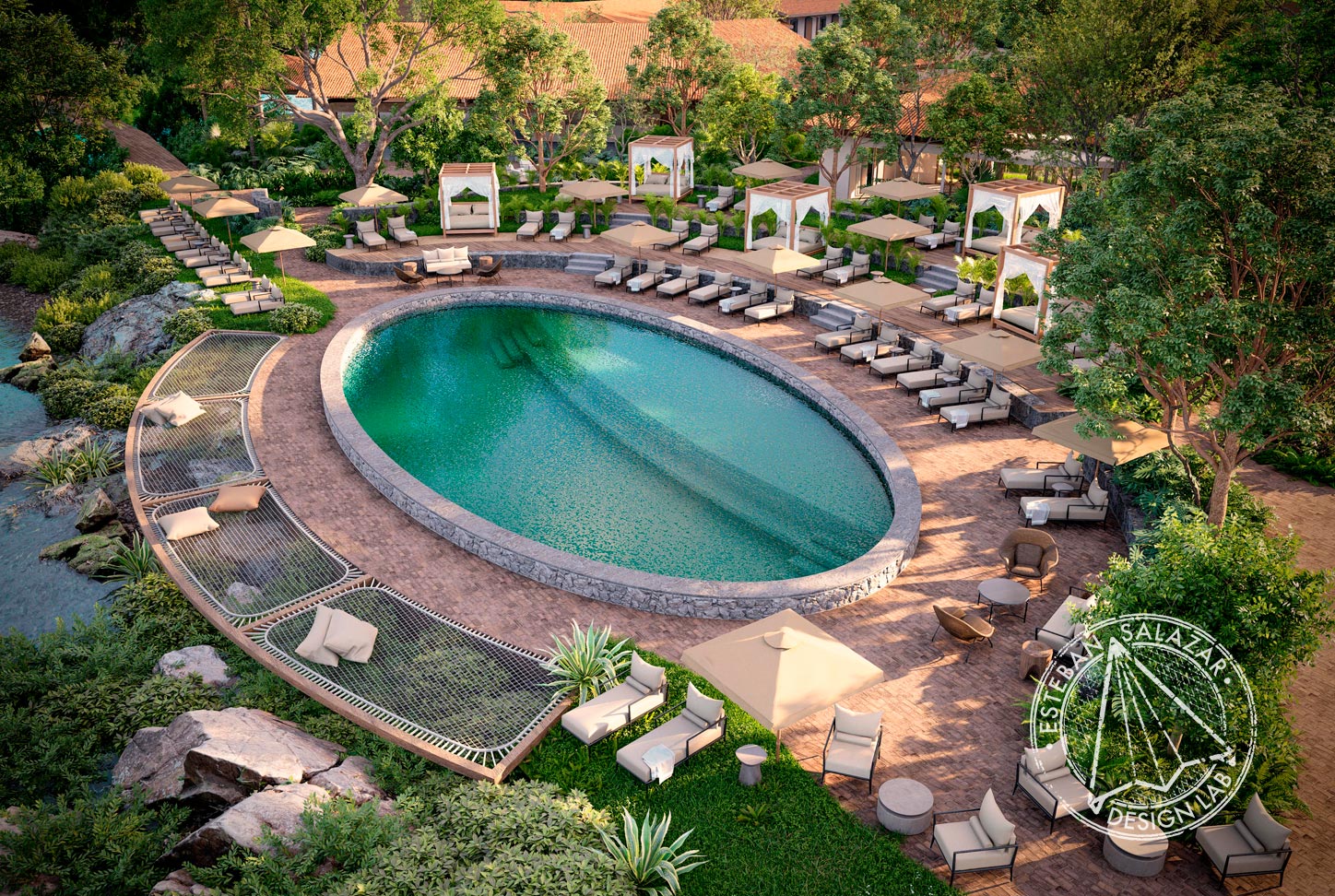
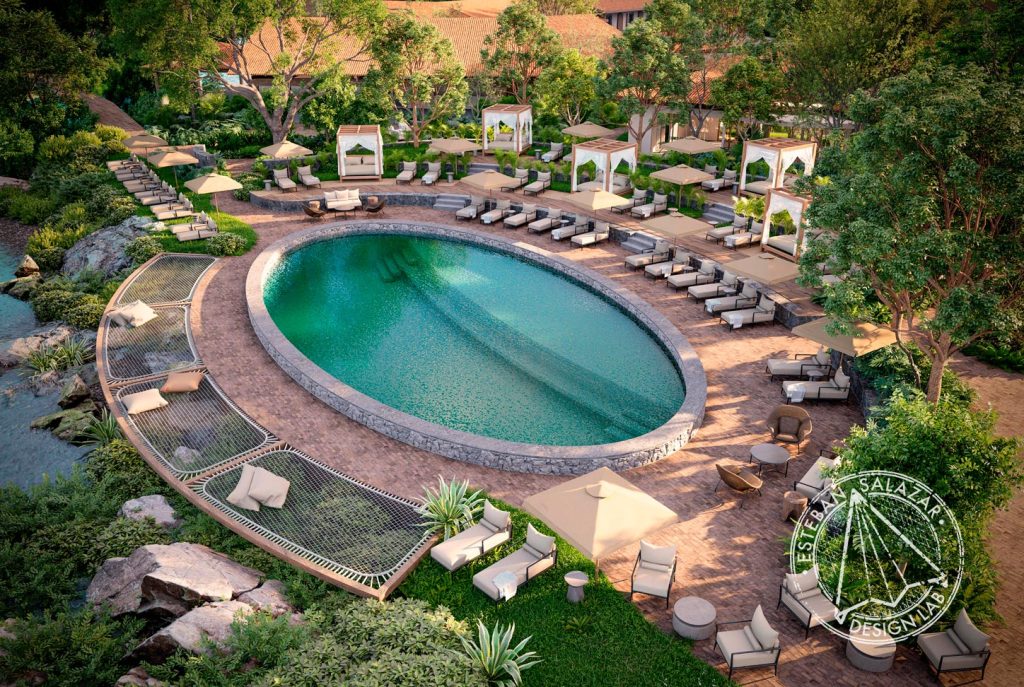
Ubicado en el exuberante paisaje costarricense, Santa Lucía se despliega como un santuario donde el legado y la naturaleza coexisten en una armonía silenciosa. Bajo la dirección creativa de Design Lab, el proyecto se centró en reinterpretar el edificio principal y sus espacios sociales —incluyendo lobby, restaurante, terrazas, piscina, snack bar y kids club— construyendo una experiencia integral e inmersiva, arraigada en la autenticidad.
Materiales Locales, Texturas y Oficio Artesanal
Materiality became the soul of the project and the starting point of its narrative. At Santa Lucía Jungle Hacienda, the selection of materials was conceived as a dialogue between two worlds: the elegance and structure of the colonial legacy, and the organic, spiritual wisdom of Costa Rica’s indigenous cultures.
Stone worn by time, brick, natural woods, clay tiles, and woven fibers were chosen not only for their beauty, but for what they represent. The colonial influence is expressed through refined craftsmanship, architectural order, and carefully worked materials, a testament to human intervention, technique, and permanence. In contrast, indigenous heritage emerges through raw textures, natural fibers, barro, and organic forms that reconnect the spaces with the land, ritual, and ancestral memory.
This duality becomes tangible throughout the project through carefully integrated design gestures. One example is the use of a woven natural mesh that forms the skin of the restaurant’s cocoon-shaped sofas, evoking an indigenous relationship with natural materials and traditional weaving techniques.
De manera complementaria, luminarias colgantes en cascada elaboradas con fibras naturales aportan suavidad, textura y un carácter artesanal, reforzando la conexión entre el diseño y la cultura material ancestral, y creando una atmósfera de presencia ceremonial sutil.
En conjunto, estos elementos conviven con la estructura colonial de techos de madera y tejas de barro, logrando un equilibrio visual y emocional entre lo orgánico y lo arquitectónico, lo artesanal y lo construido.
El Diseño Interno como Estrategia de Negocio
At Santa Lucía, interior design became the element that transformed the project from a property into a true experience. While the hotel already existed, its spaces did not yet reflect the atmosphere, identity, and emotional depth the brand envisioned.
Fue en esta etapa cuando Design Lab asumió el liderazgo del diseño interior, traduciendo la narrativa del cliente en un lenguaje espacial coherente e inmersivo. A través de un concepto cuidadosamente desarrollado, el proyecto evolucionó hacia un lugar donde el misticismo, la historia y la naturaleza se sienten más de lo que se explican.
Los huéspedes no necesitan que se les cuente la historia de Santa Lucía: la viven. A través de la secuencia de los espacios, los materiales, la luz, las texturas y el silencio, el concepto se vuelve intuitivo y emocional. Lo que recorren ya comunica aquello que la marca representa.
This is where the true power of interior design and storytelling lies. When design is intentional, narrative driven, and emotionally grounded, it creates more than beautiful spaces. It creates hotels worth remembering, destinations worth returning to, and brands that remain in the memory long after the stay has ended.
Diseño Más Allá de la Estética
The Deluxe Suites were conceived as character driven spaces rooted in a retrospective view of Costa Rica’s indigenous history. Their inspiration came from ancestral settlements and the way indigenous communities moved through the landscape. The path leading to the suites follows an existing route beside the Tarcolitos River, inviting guests to experience the rhythm of nature in a sequence that evokes those traditional journeys toward communal spaces. This intentional connection to the natural context makes the approach itself part of the guest experience.
El exterior de cada suite refuerza esta narrativa. Los fogones tradicionales fueron reinterpretados como elementos contemporáneos que evocan los lugares donde el fuego ritual reunía a las comunidades, recordando su papel en la conexión, la narración y la presencia. La arquitectura refleja principios constructivos indígenas mediante techos de palma, muros de piedra y composiciones de materiales crudos, mientras que los interiores incorporan una capa refinada de hospitalidad contemporánea, generando un contraste consciente entre la forma ancestral y el confort de primer nivel.
A different expression of this philosophy unfolds in the hotel’s restaurant – where the boundary between indoors and outdoors dissolves. Guests feel surrounded by the jungle and the sounds of the river, while remaining within a space defined by global design standards and careful architectural control. Nature becomes part of the spatial experience, uniting sophisticated design with immersive presence.
En este contexto, el diseño actúa como una guía invisible. Define cómo se llega, cómo se transita, dónde se pausa y qué se siente. Más allá de la estética, es el diseño el que transforma el espacio en historia, y la historia en una experiencia emocional duradera.
El Mayor Desafío: Diseñar en Sincronía
One of the greatest challenges of the project was the scale and complexity of Santa Lucía in relation to the time available for its development. The schedule was relatively tight for a property of this size and ambition, which required a high level of precision, coordination, and constant design refinement.
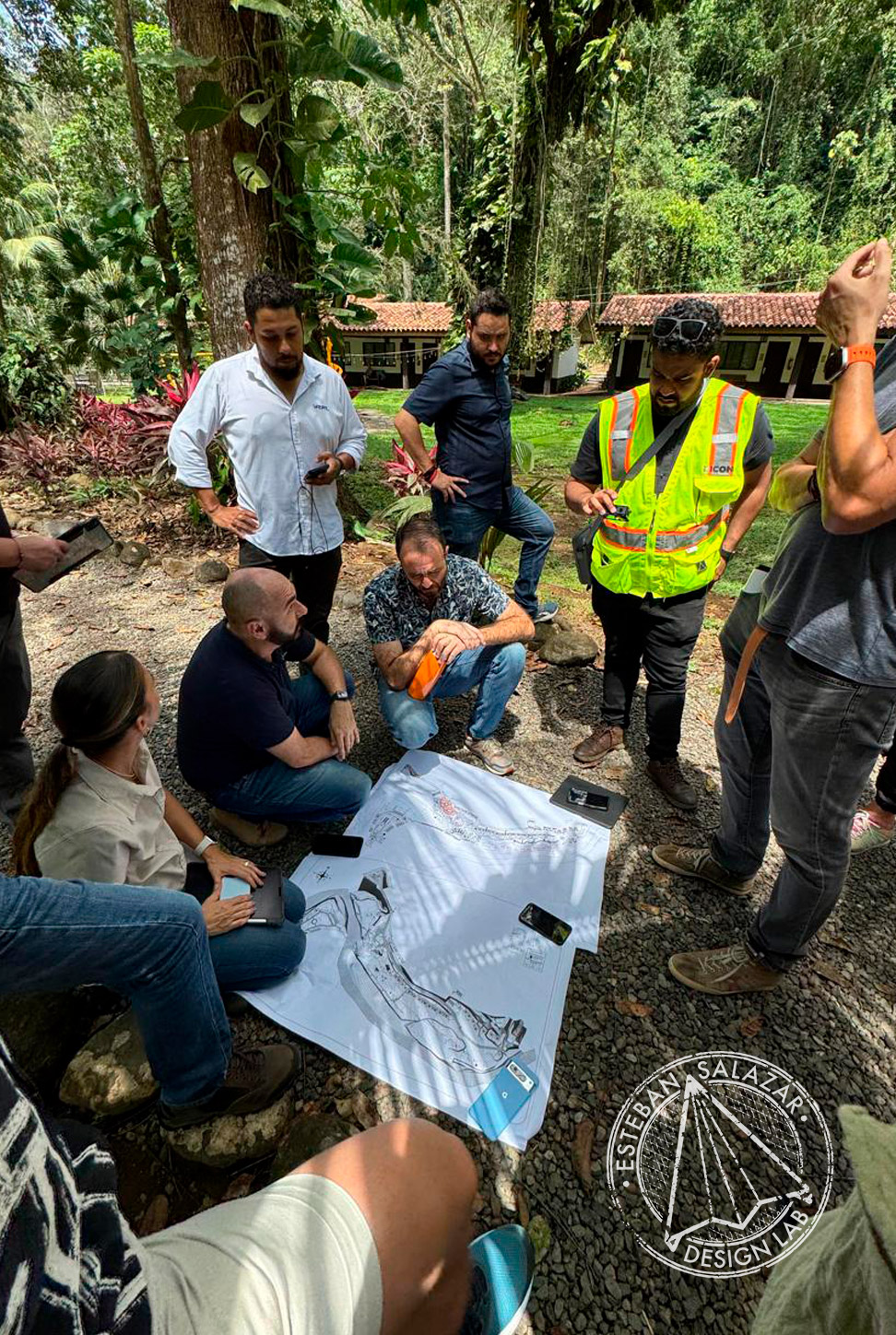
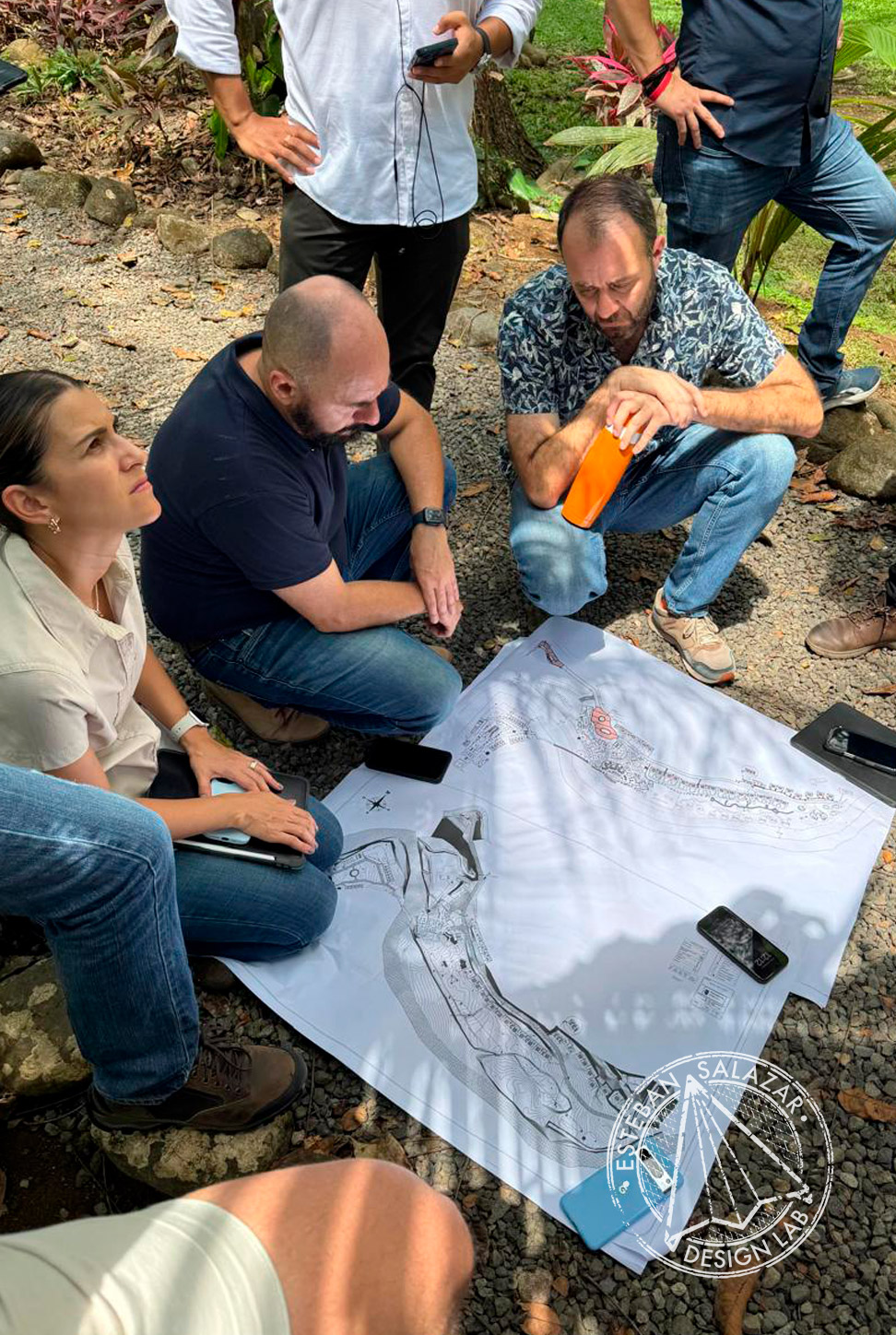
Throughout the process, Design Lab worked closely with Integra Arquitectos and TPA Landscaping, aligning architecture, interiors, and landscape design through continuous collaboration and on site decision making. Every stage demanded careful evaluation to ensure that concept, functionality, and experience evolved together.
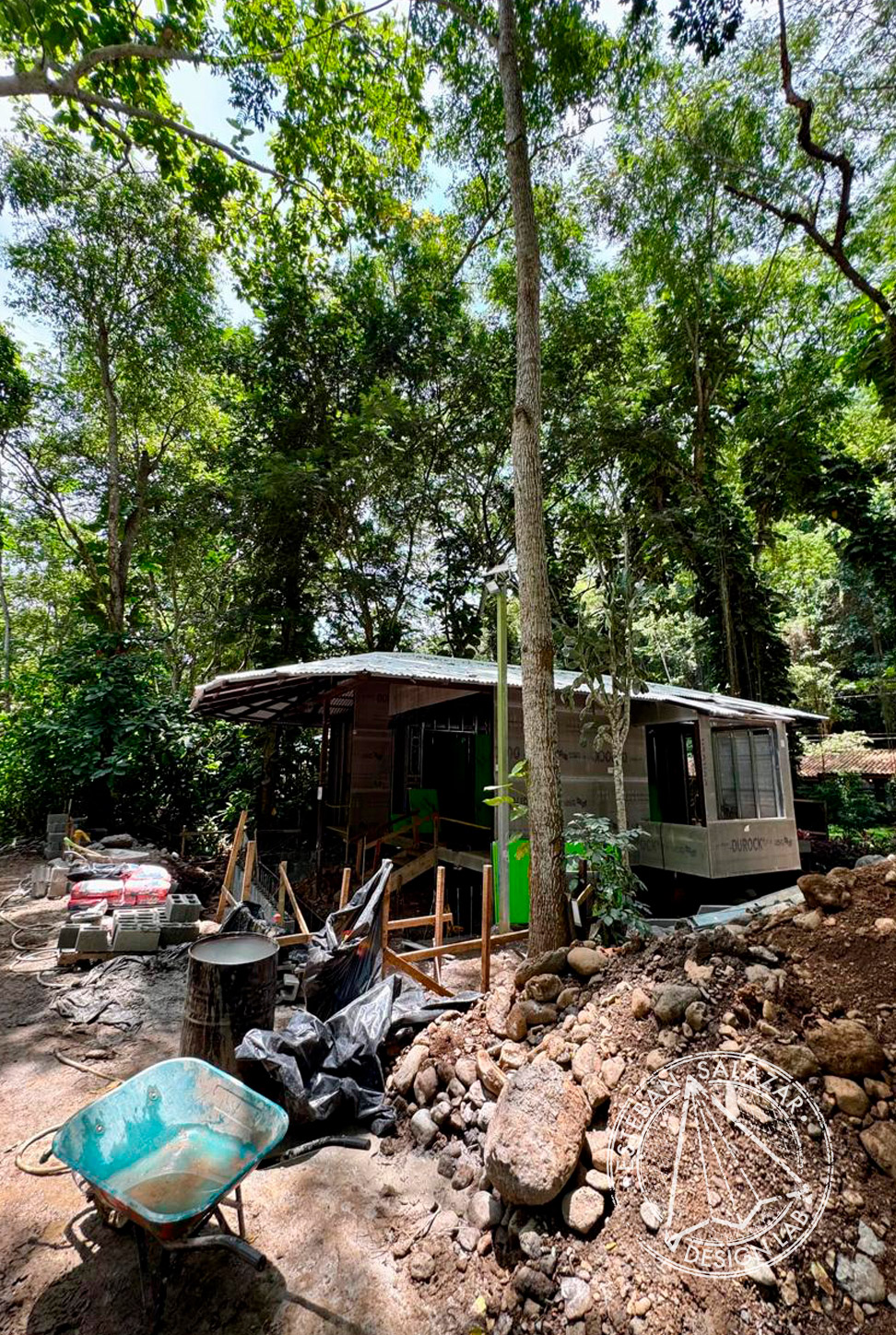
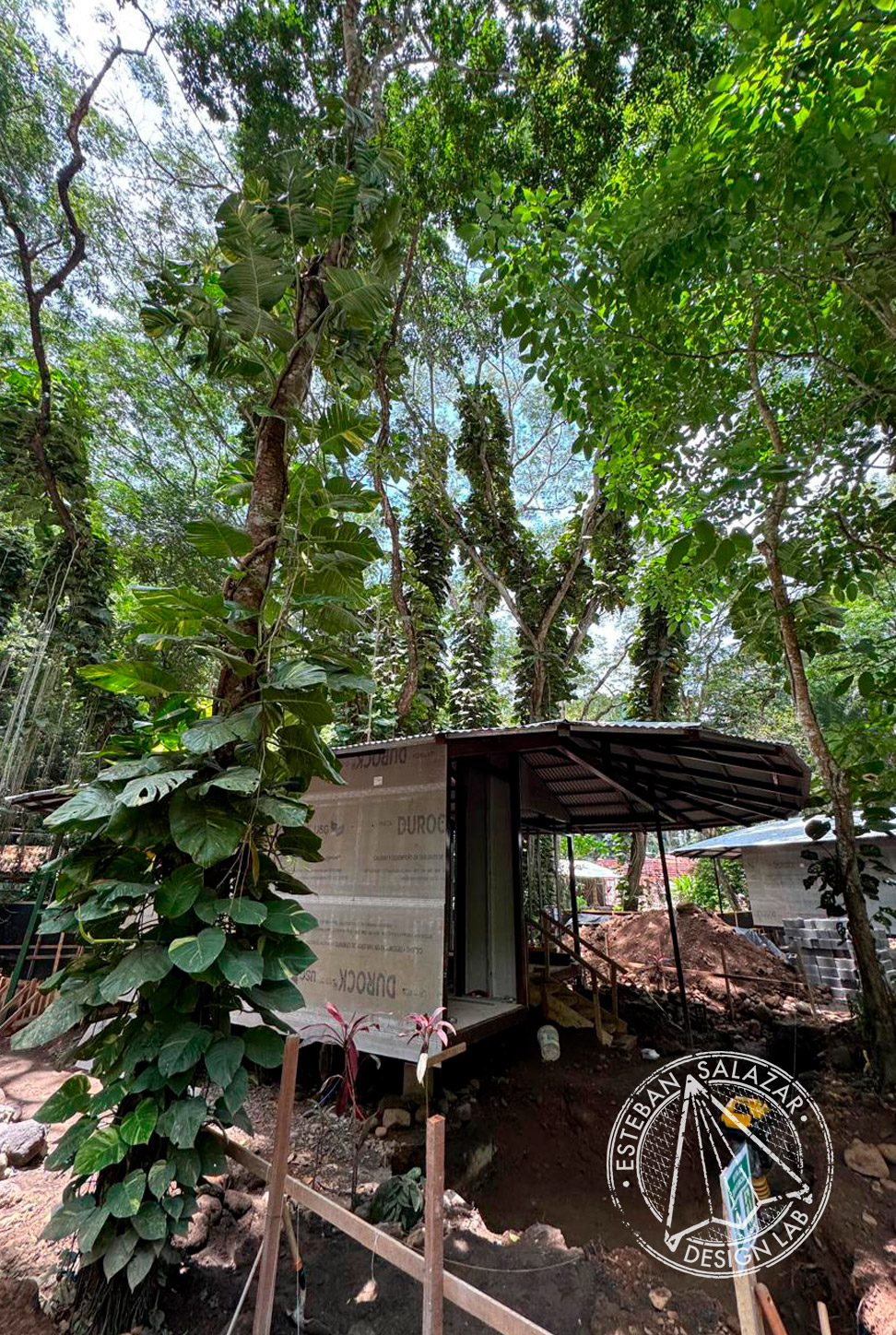
The site itself added another layer of challenge. The area is surrounded by dense vegetation, and both the natural river and existing trees had to be preserved without intervention. Designing within these constraints meant carefully studying how to relocate and shape the built elements without disturbing the environment. A significant part of the work took place directly on site, testing how structures could be integrated while maintaining the integrity of the landscape. Respect for nature became a defining principle of the project’s core.
En este contexto, todas las disciplinas trabajaron como un solo equipo. La conexión entre senderos, edificaciones y espacios comunes fue replanteada en múltiples ocasiones hasta lograr una experiencia fluida y equilibrada. Cada decisión estuvo guiada por un mismo objetivo: crear una secuencia de llegada y un entorno general que reflejara los más altos estándares de la hospitalidad contemporánea, donde el confort, la belleza y el impacto emocional conviven de forma natural.
Respuesta Emocional a Través del Diseño
Más que crear espacios bellos, el proyecto buscó crear espacios significativos, profundamente conectados con el lugar y la naturaleza. Santa Lucía Jungle Hacienda se ubica junto al Parque Nacional Carara, colindando directamente con esta área protegida, aunque manteniéndose fuera de sus límites. Esta posición privilegiada permite que el hotel dialogue constantemente con uno de los ecosistemas más importantes de Costa Rica, sin intervenirlo.
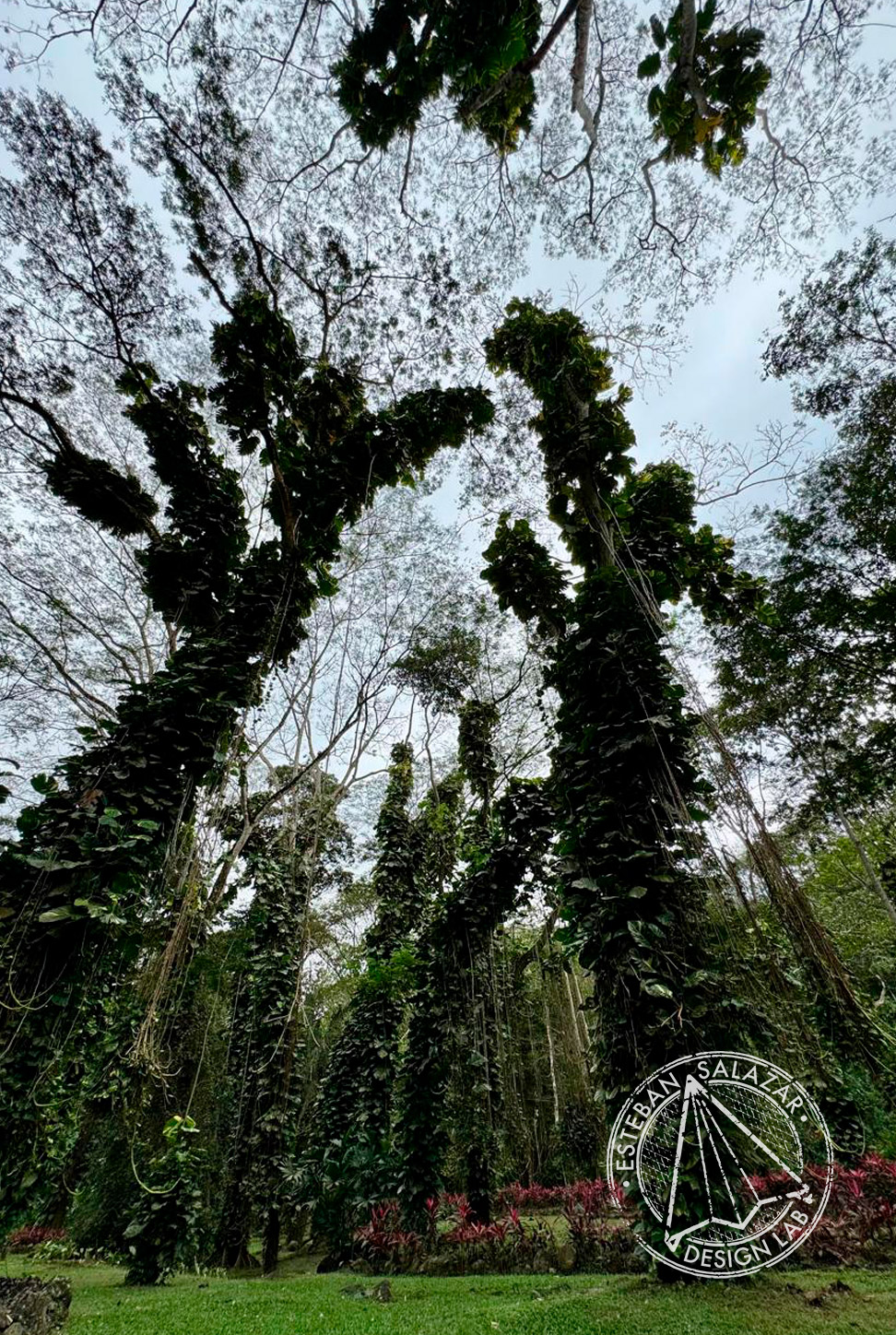
Surrounded by extraordinary biodiversity, native vegetation, and towering trees reaching approximately 15 to 20 meters in height, the property feels immersed in the forest canopy itself. This proximity to nature, combined with the richness of wildlife and landscape, transforms the hotel into a sanctuary for those seeking connection, stillness, and authenticity, while serving as a gateway to the natural wonders of the region.
A lo largo del proceso de diseño, colegas, colaboradores y visitantes compartieron una reacción similar al llegar por primera vez: una profunda sensación de inmersión. Desde el momento de ingreso, la arquitectura se abre al entorno, permitiendo que la vegetación, la luz filtrada y las vistas amplias se conviertan en componentes esenciales de la experiencia espacial.
Adding another sensory layer to this experience is the constant presence of the nearby river. Its sound flows gently across the property, becoming part of the hotel’s natural soundtrack. For many guests, this quiet murmur induces calm, slows the rhythm of thought, and reinforces the feeling of being sheltered within nature, enhancing the emotional connection to the place and turning each stay into a moment of genuine restoration.
Una Historia Viva
En el panorama actual de la hospitalidad, muchos hoteles se conciben a partir de tendencias, fórmulas y referencias visuales fácilmente reconocibles, pero intercambiables. Espacios bellos, funcionales y eficientes, pero desconectados de un significado más profundo. Lugares que podrían existir en cualquier parte, porque no pertenecen realmente a ningún sitio.
Santa Lucía was envisioned differently. From the beginning, the project was shaped by the belief that a truly memorable hotel is not defined by style alone, but by the story it carries. When architecture and interior design are guided by a clear narrative, spaces gain identity, emotion, and intention. They stop being neutral backdrops and become places with soul, capable of being felt before they are understood.
For Design Lab by Esteban Salazar, the project reflects a core belief: when interior design is rooted in authenticity, it becomes timeless. It gains the ability to honor the past while thoughtfully shaping meaningful, sensorial experiences that meet and elevate the global standards of the hospitality world.